Not medical advice. Device sharing, emergency contacts, glucagon, and college-care decisions belong with your diabetes care team and your child’s plan – not a blog post or an app headline.
Some nights, after the last alarm, my brain jumps ten years ahead. Dorm room. First apartment. A roommate who means well and freezes. A kid who wants privacy more than a parent watching every arrow. I do not need a calendar invite for that fear. It shows up on its own.
That is why a Beyond Type 1 spotlight by Dalila Brent stuck with me. Arianna Gehan, diagnosed at 11, describes day one of college: she stopped sharing blood sugar with her parents – distance made the “you’re low” call noise, and she did not want to burden a roommate who would not know what 50 meant. Then she had a scary low alone in the dorm. That moment sparked Lowcate, an app built so trusted contacts can get a text with glucose context and emergency instructions without living in a follow app. Read BT1 for her full story. What follows is the parent question her story unlocked for us: what are we building toward before that first alone-low ever happens?
We already live a little in the future
We are not only managing today. We are rehearsing a handoff that will one day be permanent. School boxes, 504 plans, and sleepover scripts are early chapters of the same book: can another human help when we are not in the room?
The dorm low is not only “someone else’s college story.” It is a preview of the moment when parental watching stops working – college, a first job, a long trip, or a teen who simply refuses Follow.
Name the deal before move-in
When a young adult cuts CGM sharing, it is rarely pure rebellion. It is often dignity and a real calculation: if Mom is an hour away, a “you’re low” text does not treat the low. It only adds noise on top of other alarms.
So we treat independence as a deal, not a cliff:
- They get less 24/7 parental watching and more control over who sees numbers.
- We get a written replacement plan – not a shrug and “figure it out.”
- Everyone gets clarity about who is not the care team (most roommates, most RAs, most friends).
If the deal is only “no more Follow” with nothing in its place, that is not independence. That is hope wearing a backpack.
Who gets what kind of access
Apps that text a contact with instructions (Lowcate’s pitch is one example – check current CGM support, platforms, and cost yourself) point at something useful: not every person needs the same access.
- Full context: people who already know how to help – parents early on, a partner later, maybe one trained friend. They may still use official follow tools if both sides agree.
- Emergency text only: people who should not live in numbers all day but should know what to do if a low alert hits – plain-language steps, where glucagon lives, when to call 911.
- No glucose feed: most roommates and classmates. They get a one-page card or a 60-second talk: “If I am confused or unresponsive, do X. Do not guess insulin.”
Asking a roommate to watch arrows 24/7 is unfair to them and fragile for the kid. A short emergency card beats a reluctant follow subscription.
Practice years before college
We do not wait for move-in day. We practice with tools we already use:
- Sleepovers and parties – short handoffs for non-diabetes adults (sleepover notes).
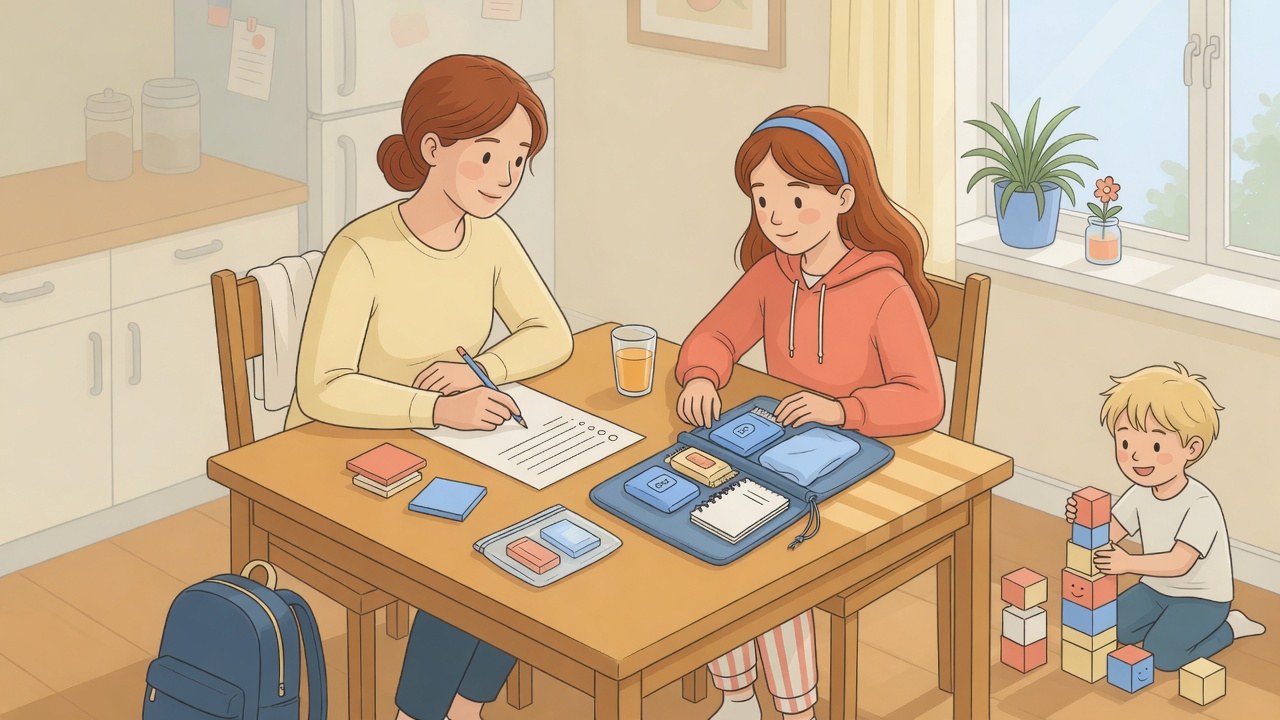
- School and sports – nurse plans, coach cards, bags other people can open in the dark (back-to-school boxes).
- Travel kits – findable sugar and spare supplies scale from a weekend trip to a dorm drawer (packing checklist, sick-day kit).
A short talk with your teen
“I get why you do not want me watching every arrow. Let’s design who gets what instead. Who gets the emergency text if you are alone and not answering? Where is glucagon written down so a scared person can still help? What stays with the clinic plan no matter which app we try?”
And for the next endo visit: “We are thinking about college or more independent time. What do you want in writing for emergency contacts, glucagon training, and when Follow or sharing should stay on?”
What we are not changing yet
- Not endorsing any single app as medical care.
- Not dropping overnight safety tools while our kid is still young and wants or needs them.
- Not treating “life-saving” marketing language as a guarantee – tools fail; people freeze; phones die.
- Still stocking findable fast sugar and practicing the boring logistics.
Bottom line
The dorm-room low in Arianna’s story is a gift to parents of younger kids too. It names the future we already worry about: the day our child leaves the house, and the day watching from a phone is no longer the plan. Start the conversation early. Sort who gets what kind of help. Practice handoffs at sleepovers and school. Keep the clinic in charge of anything medical.
Should my teen stop sharing CGM data with me?
That is a family and clinic decision, not a blog rule. Trade less watching for a clearer emergency plan – do not trade it for silence.
Is Lowcate a replacement for Dexcom Follow?
We are not product reviewers here. Check current platforms, CGM compatibility, privacy, and cost yourself. Official manufacturer follow tools and your care plan still matter.
What can we practice before college?
Short handoffs with other adults, a written low plan a non-parent can follow, findable supplies, and one calm conversation about privacy versus safety.
Years before the leave-home chapter, we practice smaller handoffs – school days, boluses with a parent still verifying on Follow and pump history. That middle stage is its own post: when kids start helping manage type 1 (trust but verify).
What if my kid is still little?
You are not late. You are early. Every coach card and sleepover bag is training for a future house with fewer of your fingerprints on it.
Not medical advice. Talk with your child’s diabetes care team before changing monitoring, emergency contacts, glucagon plans, or independence rules.
Sources: Dalila Brent, Beyond Type 1 community spotlight, July 27, 2026. Product site: lowcate.app.