Not medical advice. No robot, app, or future demo replaces your diabetes care team. Overnight plans, lows, and anything involving insulin stay between you and the clinicians who know your kid.
Some nights I am not really sleeping. I am half-listening for the phone. A CGM arrow drifts down, the Follow app buzzes, and I am already standing in the hallway before my brain has fully woken up. That is the job a lot of us have quietly accepted: overnight watch.
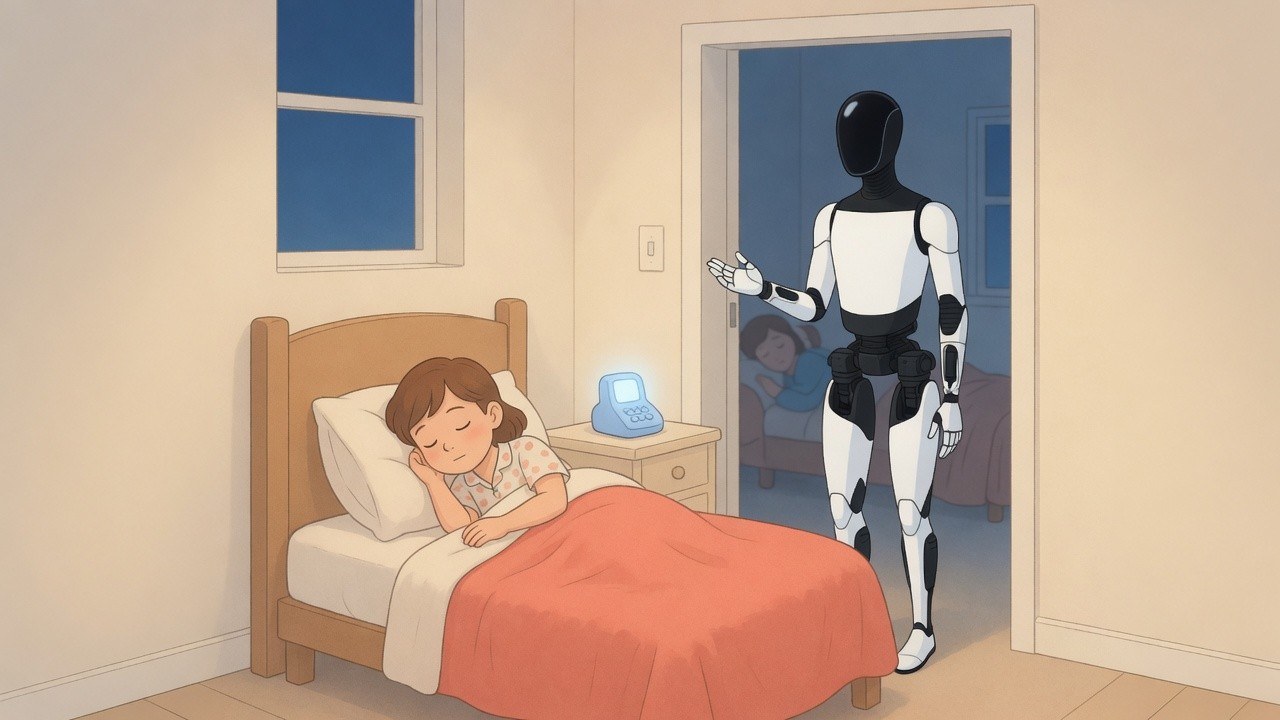
So when I see Tesla’s humanoid robot Optimus in a showroom or a demo clip, my brain does not jump to factory floors. It jumps to that hallway. What if something – carefully, safely, years from now – could keep a second set of eyes on our kid’s numbers while we actually rest?
Key takeaway: Optimus is not a diabetes product you can buy for overnight lows. The useful thought is simpler: parents already know what “watch and wake” looks like from alert dogs and phone alarms. If a home robot ever helps, that is the job family life actually needs – not a sci-fi doctor in the living room.
The alert-dog job, in plain words
Some families train or live with diabetes alert dogs. The idea is not that the dog runs the pump. The dog notices something is off, and gets a human involved. Bark, nudge, wake Mom. Same family. Same juice box. Same care team rules – just an earlier heads-up.
Phone alarms and Follow already try to do a tech version of that. They are imperfect. They still wake us. They still miss moments. They still require a person who can walk into the room, check, and treat.
That is the overnight job I keep mapping onto a bipedal robot when the hype videos roll through my feed:
- Watch the numbers (or the room) the way we wish we could without living on 20-minute sleep cycles
- Wake a designated adult when something needs a human
- Maybe, someday, fetch the juice or the kit drawer so we are not scavenging half-asleep
- Stay calm when everyone else is foggy
That is closer to “alert dog plus helpful roommate” than “robot endo.” And that framing keeps me from expecting the wrong thing.
What Optimus actually is right now
Tesla is building Optimus as a general-purpose humanoid – first for repetitive and industrial work, with long-range talk about home tasks later. Public demos show walking, simple chores, factory-style jobs. Timelines move. Prices and availability are still future talk.
What there is not, today: an FDA-cleared Optimus diabetes caregiver. No “buy this robot and it will watch your child’s overnight lows” product page. No clearance that says it can treat a severe low, dose insulin, or replace a trained parent, nurse, or alert dog. If a clip implies healthcare magic, treat it like a trailer, not a care plan.
What I would actually want – if it ever got real
I do not want a machine guessing insulin from a viral video. I want help with the parts of overnight care that wear humans down:
- Watch: notice a sustained drop or a stuck high the way Follow tries to now – and escalate to a person, not freestyle a dose
- Wake: reliably get the right adult up, even if we silenced the wrong phone
- Fetch: juice, tabs, gel, the labeled drawer – logistics, not medical judgment
- Stay put: a calm presence in the house when one parent is alone with a sick kid and a bad low on another night
Anything that touches insulin, glucagon decisions, or “is this fine?” stays clinical. Full stop. A robot that only wakes me is already a huge gift compared with a robot that pretends to be the care team.
What we are not doing while we wait
We are not parking our overnight plan on a showroom biped. Tonight still looks like:
- CGM and Follow (if your kid wears them) set the way the care team recommends
- Phone on the charger, volume not buried under silent-mode chaos
- Juice or tabs where a half-asleep adult can find them without a scavenger hunt
- A simple written plan a spouse, grandparent, or sitter can run without living in the app
If alert dogs are part of another family’s life, great – that is their trained system with their trainers and clinicians. We are not swapping that for a demo robot either. Tools earn trust; they do not get it from a keynote.
And when kids get older – sleepovers, camps, eventually leaving home – the same idea holds: practice human handoffs now. See our notes on the independence handoff and sleepovers and parties. No future robot cancels those reps.
Bottom line
Optimus is a real technology story. An overnight diabetes robot that watches like an alert dog and wakes you when it matters is still a parent daydream – a hopeful one, not a shopping list. Hope for the far version if you want. Build the near one tonight: alarms you can hear, sugar you can find, a person who knows the plan. That is still the watch that works.
FAQ
Can Tesla Optimus watch my child’s blood sugar overnight today?
No. There is no consumer Optimus product cleared or sold as a diabetes overnight watcher. Use the tools and human plan your care team supports.
Is this the same as a diabetes alert dog?
Only as a comparison. Alert dogs are living, trained animals some families use with professional guidance. Optimus is an industrial/home humanoid still in development. The shared idea is “notice and get a human” – not “replace the endo.”
Should we wait for home robots before fixing overnight chaos?
No. Phone placement, written plans, supply spots, and Follow settings help whether or not a biped ever stands in the hallway.
Not medical advice. Talk overnight monitoring and emergency plans through with your child’s diabetes care team. We have no affiliation with Tesla. We do not recommend relying on any robot for medical care. Technology claims change quickly – verify anything real against clinicians and regulators before you trust it with a low.
Context (not a product endorsement): Tesla describes Optimus as a general-purpose humanoid for unsafe, repetitive, or boring tasks. Public reporting still frames home and medical use as early or aspirational. For everyday T1D gear and monitoring basics, start with our CGM hub.