If an Elf on the Shelf visits your house, Type 1 does not cancel the magic – it just means the elf needs better situational awareness. Sticky fingers near sites, candy props without a plan, and 5 a.m. scavenger hunts all hit differently when someone in the house is counting carbs and watching arrows.
Key takeaway: Keep the elf funny and kind. Never use diabetes as a joke about “being bad.” Build scenes that include devices as normal, stash low treatments in “elf-approved” spots, and agree on candy props before December 1 so you are not improvising insulin math at midnight.
Not medical advice. Elf scenes are play. Do not change insulin, food, or device settings based on a toy. Follow your diabetes care team for all management decisions. Supervise small parts and candy around young kids.
This post may contain affiliate links. Please see the affiliate disclosure for more details.
House rules for a T1D-friendly elf
- No shame scenes. The elf does not “catch” someone for a high or low. Diabetes is not naughtiness.
- No real medical supplies as props without adult control – no real needles, no open insulin, no “borrowing” the only glucagon for a photo.
- Devices stay respected. Do not peel a CGM or unclip a pump for content. Pose the elf next to a toy device or a soft friend instead.
- Candy is planned. If the elf leaves treats, decide the family rule first (morning after, trade pile, or save for a planned dessert).
- Sleep still matters. A 4:30 a.m. elf hunt on a school night is optional chaos, not mandatory magic.
Scene ideas that work in a T1D house
Identity-positive (not medical comedy)
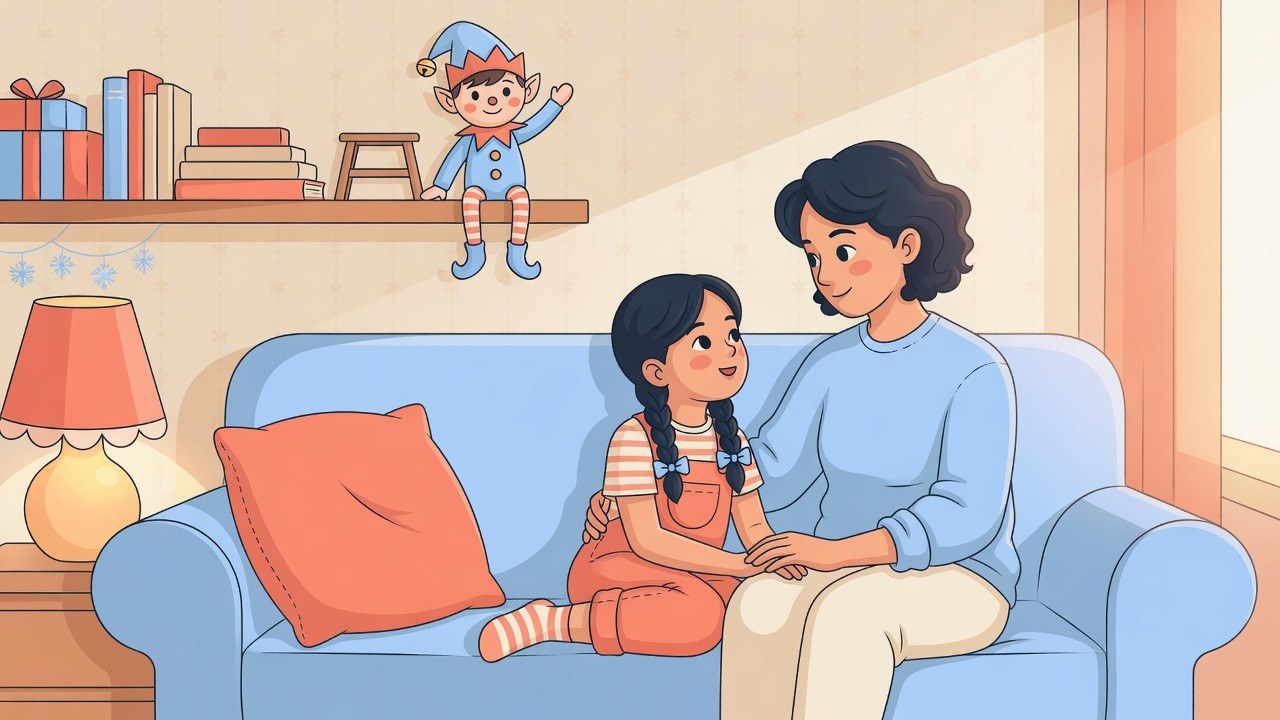
- Elf “reads” a T1D picture book under a lamp with a note: “Proud of you.”
- Elf sits with a plush friend like the Ruby Diabetes Awareness Bear – normal kid scene, medical life included
- Elf packs a tiny backpack next to the real school bag with a blank “you’ve got this” note (no fake care-plan text that confuses kids)
Practical magic
- Elf “restocks” a small bowl of sealed low treatments (tabs or juice boxes you already use) – parent actually restocked, elf gets the credit
- Elf sits on the travel packing checklist with sunglasses – nod to holiday trips without packing real insulin for the photo
- Elf “tests” a toy doctor kit on a stuffed animal only
Classic funny (with a safety pass)
- Toilet-paper fashion show – fine
- Zip-tied to a chandelier – maybe not if someone needs a middle-of-night low treatment path through the room
- Kitchen flour mess – fine if you can clean before breakfast carbs get weird
- Hiding in the fridge – only if nothing blocks the juice or tabs you need for lows
Candy, cookies, and the elf industrial complex
Mini candy canes and chocolate coins are elf cliches. In a T1D house they are also carbs. Options we like:
- Non-food props most nights (stickers, notes, silly poses)
- Food props on nights you already planned a treat
- Trade jar for candy the elf “found” – same muscle as Switch Witch thinking
More holiday framing: our holidays hub and Christmas toy ideas.
Accessories worth considering
- Extra elf pets or props your kid already loves (not a full store aisle)
- A dedicated elf shelf away from the real supply caddy so nobody “helps” by moving insulin
- Switch Witch book nearby if candy season is still lingering from Halloween
- Glucose tabs in parent pockets either way – elf nights do not pause lows
FAQ
Should the elf talk about blood sugar?
Only if your kid wants that kind of inclusion. Encouragement is fine. Jokes about numbers, “bad” highs, or punishment are not.
What if we skip the elf entirely?
Totally valid. Sleep and bandwidth are medical-adjacent resources in a T1D house. Magic is optional.
Can the elf help with site changes?
As cheer only. The elf does not insert sensors or “do” insulin. Kids can role-play with toys; adults still follow the care plan.
Bottom line
A T1D elf is still an elf – silly, optional, and never the boss of diabetes. Keep scenes kind, keep real supplies under adult control, and save your energy for the parts of December that actually matter: a kid who feels loved on regular days and on high-alarm days.