This post may contain affiliate links. Please see the affiliate disclosure for more details.
Not medical advice. Talk with your child’s diabetes care team before changing insulin, device settings, or activity rules.
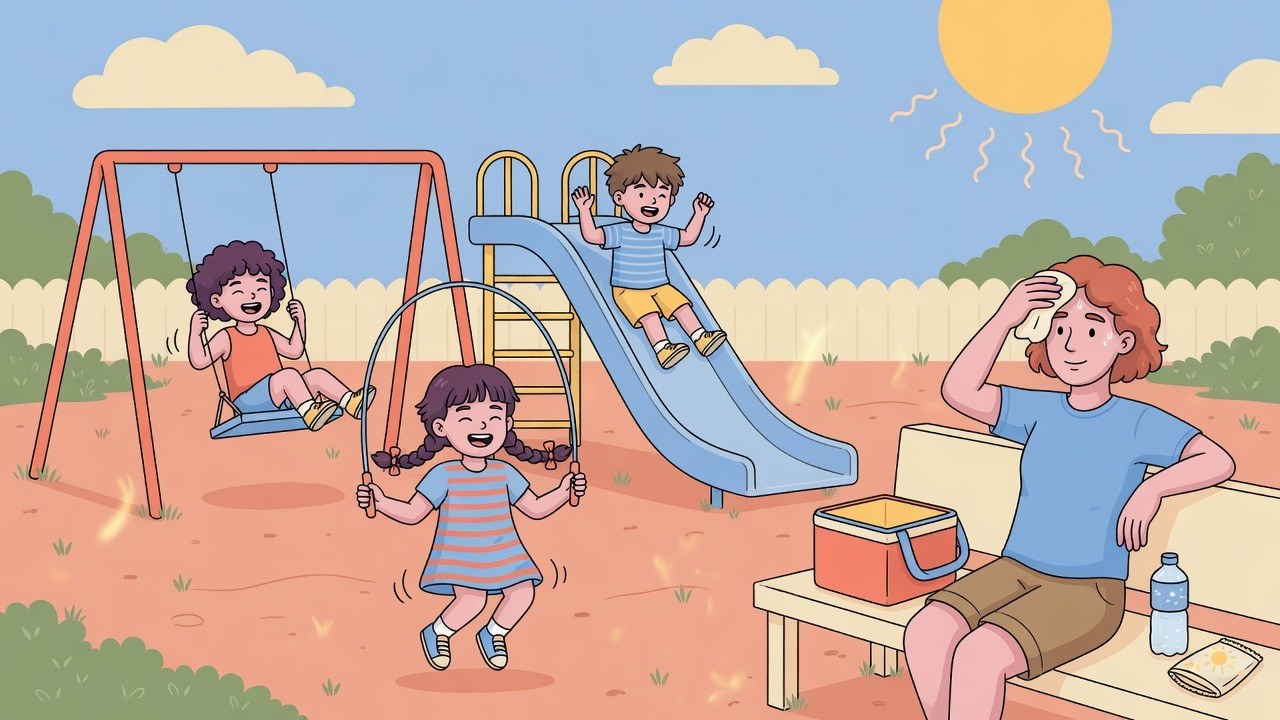
San Diego summers do not always feel “that hot” until your kid has been at the park for two hours, the phone is lagging on Follow, and someone says they just need to tough it out in the sun. That is usually when we get the weird low that does not look like a normal meal-time low.
Medscape covered a study in Diabetes Care that looked at a ton of CGM readings from adults with Type 1 in the U.K. Warmer outdoor temperatures were linked with more short-term lows, strongest on the same day. The authors also noted this was U.K. weather, so it is not a perfect match for every place. Full write-up: Medscape. Abstract: PubMed.
We are not U.K. adults in that study. We still pay attention because heat plus activity is already a messy combo at our house – especially on sports and outdoor days.
What we actually do on hot days
We do not open with “cut insulin by X percent” from a headline. We try to keep it simple:
- Heat plus sports plus pool plus a late lunch is a bigger deal than heat alone. We watch more carefully on stacked days.
- No-shade playgrounds and sidelines make things feel more random.
- More sweating and “I feel weird” means more checks, not fewer.
- Insulin and glucose tabs hate sitting in a hot car. Bag first, trunk never. (See our glucose tab storage notes if yours melt into powder.)
What we pack on hot outdoor days (just examples, not prescriptions): a small insulin cooling wallet so pens or vials are not trunk soup, and glucose tablets that live in the bag, not the glove box. Gear does not replace a care-team plan. It just stops the “we left the juice in a hot car” problem.
What I text the coach or grandma
The study will not reach the adults at practice. A short text might:
“Hot days can mean unexpected lows for kids with T1D – not because they are being dramatic. If they feel off, or the CGM is dropping fast, please stop for shade, water, and a check before one more drill. Text me. Don’t wait until they look pale.”
Same idea as our note on video games and blood sugar – context changes things, so helpers need a simple rule.
What is for us vs the doctor
Stuff we can do without an appointment: shade breaks, actual water, juice or tabs in the bag, more glances at the CGM outside, pull them earlier if the arrows look bad, keep insulin out of the heat.
Stuff only with the care team: temporary basal changes, exercise settings, closed-loop tweaks. If hot outdoor days keep giving same-day lows for a week, that is a clinic question, not a weekend experiment.
Something I might say at the next visit: “On hot outdoor days we keep getting downs even when meals look normal. What do you want us doing for heat instead of guessing from the news?”
What we are not doing
- Not big insulin cuts from one headline. This was adults in the U.K. Kids and our devices are not copy-paste.
- Not only watching for lows. Heat can go both ways, including with dehydration.
- Not shaming a kid for needing a break. “Everyone else is still playing” is how lows get late.
- Not leaving the bag in a hot trunk “for a quick stop.”
Bottom line
Warmer days were linked with more short-term lows in that study. Our job is not to re-do the statistics. It is to watch a little closer outside, pack the boring supplies, tell helpers what to do, and ask the care team if the pattern keeps showing up.
Does hot weather always cause lows?
No. Research links heat with more short-term lows sometimes, and heat can also contribute to highs. It is a reason to pay attention, not a guarantee either way.
Should we change insulin settings when it is hot?
Not from a news article alone. Shade, water, checks, and protected supplies are fair game. Setting changes go through the care team.
What should coaches know?
Stop for shade, water, and a check if the kid feels off or the CGM is falling fast. Rescue carbs on the field, not in a hot car.
Not medical advice. We are parents sharing how we think about summer days. Talk with your child’s diabetes care team before changing insulin, devices, or activity rules.
Sources: Medscape; PubMed / Diabetes Care. Related: video games and blood sugar, sports hub, glucose tab storage.